Posted by: hcpen1111


HK Gay man wins High Court case repealing HK ban on under21 gay sex
This high profile case concerned a Hong Kong gay man who applied to the High Court requesting that the Hong Kong law banning sex between gay men under 21 be repealed on the grounds that it constituted discrimination against gay men and also infringed upon Human rights law and Basic law of HK that all citizens, incl gay men, were equal before the law. In HK, consenting sex between gay men is legal since 1991 but only for 21yrs and above whereas heterosexual sex (man and woman) and sex between lesbians is legal for under 21yrs old. Thus it meant that previously, only gay men were banned from having sex if they were under 21 whilst heterosexuals and lesbians could have sex even under 21. The HK High Court ruled in favour of the gay man who applied and repealed the old HK law on the grounds of discrimination especially given lesbians were not subjected to the same ban. Now, therefore, gay men in HK under 21 can also legally engage in consensual sexual intercourse. What surprised me and i'm sure many HK ppl must have been how 'normal' the gay man who sued looked. Asian society still has a stereotype that gay men look either (a)effeminate/sissy (b) thin and pale or some ppl would think if gay men did not come under the first 2 categories then they must come under either (c)fashionable looks conscious (d) wears tight clothing and works out often....but the gay man who won, as can be seen from the photo above, was in none of the categories most ppl would have of gay men and no one would probably even suspect he was gay if they knew him and he did not tell them. Further, he had a respectable occupation as a volunteer with the famous NGO Doctors without Borders Medical San Frontiers which operates in poor countries giving medical treatment to ppl.The gay community really needs public figures like him to provide a positive role model for gays and lesbians and more importantly to dispel myths about how gay men are like amongst society at large as putting a sissy like gay man as a public figure for gay rights will not attract much support from society given it reinforces negative perceptions about gay men but putting a very 'normal looking' good looking guy with a respectable occupation is bound to jolt people and gain more sympathy and understanding for gay men...


Former Korean comfort women tell of wartime ordeal
Click Pic for more photos.
One of the most heart rendering and atrocious crimes committed by the Imperial Japanese Forces during WW2 is the comfort women system. The comfort women refer to the 200 000 or so Asian women, mostly of Korean origin, forced into sexual slavery for the Japanese Imperial army during WW2. Many of them were merely girls at the time which suited the purpose of the system which was set up to prevent rapes of civilian populations by allowing the rape of some girls to 'save' the wider female population as well as prevent sexual diseases from spreading through control of the women. However, as is now known, the system did not prevent rapes by the japanese troops who raped millions of Asian women from 1937-1945 despite the comfort women provided by the Army.
Japan till this day has NEVER officially apologised to the women and all comfort women lawsuits have been rejected by japan's courts. The Japanese govt even denied their existence as well as govt involvement until 1993 when a Japanese journalist found crucial documents damning the Japanese wartime military's full involvement in the system and published it in a major national newspaper forcing govt admittance.
On Aug 10 2005 rallies were held across Asia demanding an official apology and reparations for comfort women as their numbers are dwindling year by year. However, Japan's govt continues to refuse any laws officially compensating them nor issue any formal apology issued by the parliament. Korean former comfort women have also rallied with supporters in front of the Japanese embassy in Seoul every Wednesday since 1993 and continue to protest for an official apology and compensation till this very day, 60 years after that devastating war which left them with irreparable scars, both on their bodies and on minds.
From now on, i shall include testimonies of former comfort women regularly under a new column called: Comfort Women to allow ppl who view my blog who are not familiar with this issue to gain an insight into it and refute claims by Japanese lunatics (namely the nationalist right-wing) who continue to claim that these women were prostitutes who went for the money.
All testimonies have been compiled by organisations, reporters, academics,researchers and institutes involved in the comfort women issue.
Yuan Zhulin's Story:
Haunted by violent memories as a wartime sex slave for Japanese troops, Yuan Zhulin, 84, says it is impossible to sleep at night.
As she sits awake holed up in the dank and spartan room she calls home in central China's Wuhan city, the memories of atrocities committed against her ravage her mind.
She is not alone, as up to 200,000 other women across the region were forced into wartime sex slavery during Japan's conquest of Asia, although the number still alive to tell their story is rapidly dwindling.
"I can't forget the past, it's always on my mind," Yuan told AFP in an interview as China staged widespread anti-Japanese protests over the past two weekends.
She often weeps uncontrollably, burying her head in her arms as she recounts a personal history so full of pain and suffering it is hard to believe her story is not some fictional horror.
But her tears and the physical scars bear testament to the awful truth, one that after decades of silence she says must be told before she goes, willingly, to her Catholic God -- where she hopes to "suffer no more."
And so each time, after drying her eyes and regaining her composure, Yuan continues her harrowing tale.
"More than 10 Japanese soldiers waited outside my room everyday," said the frail woman, who was 17 when troops arrived in Wuhan and promptly renamed her Masako and forced her into prostitution.
"They had no patience when waiting outside. They would kick the door with their boots and they would scare me to death and I cried and cried. After the 10 soldiers had left I couldn't even sit, it was so painful," Yuan said.
"I'm a little embarrassed talking about this but many of us couldn't even walk," she weeps, adding that her years as a comfort woman, the euphemistic term for forced prostitution, had done her body irreparable damage.
After an abortion endangered her life, she had to continue serving soldiers despite pain so excruciating that she was eventually given medicine.
"But after taking the pills I could never get pregnant again," Yuan said.
Less than a year after she arrived at the brothel -- around the time that Wuhan, under months of gas bombardments, finally fell to Imperial troops in October 1938 -- Yuan and some other young women hatched an escape plan.
But unable to surmount the electric wire surrounding their prison home, they were caught and beaten to within an inch of their lives.
"They kicked us and bashed us, and there is still a scar on my back and it's still very painful," Yuan said, showing the large crater-like scars on her lower waist. "My bones were broken by the kicks."
Things took a mild turn for the better when one sympathetic Japanese soldier promised to come to her aid.
"He left my room without sleeping with me, he knew that I was suffering. He was a good man. He told me to wait for him to one day come and take me away," said Yuan, who sometimes has trouble remembering names and precise dates.
In the meantime, another Japanese officer took a liking to her round-faced good looks and pulled her out of the den to make her his sole concubine.
Six months later, the kind Japanese soldier kept his word, helping to end her one-and-half life-altering years in the brothel.
"We had nothing, life was hard, but better than living in there," she said of the ensuing relationship with the man that lasted until the end of the war.
It was a Chinese woman named Zhang Xiuying, however, who tricked Yuan and a handful of other women into prostitution, by promising employment in a hotel as a maid along with a small advance.
At the time, Yuan was desperate to feed her newborn child and accepted the proposal in hopes of helping her family, only to find herself a sex slave.
Her destitute parents had already given away her two younger sisters because there was not enough to eat, and her father later died of malnutrition.
After the Japanese arrived and Yuan was forced into the brothel she never saw her child again.
"My poor little baby. She was so pretty and our neighbors would drop in my place to see her, and she just died like that (at 9 months)," she said as her asthmatic breathing became hard.
"You can tell how much I hate the Japanese."
Speaking of crimes in Wuhan internment camps where the Japanese forced a huge number of Chinese to live, Yuan tells of one man who was beaten for forgetting his identification before being thrown into the Yangtze river and left for dead.
"If someone got sick or had a fever, they would just burn them to death because they were afraid of the plague," she said.
According to official Chinese estimates, 35 million Chinese were killed or injured in the Sino-Japanese war between 1937-45.
Asked how she saw modern Japan, Yuan said:" There are good people in Japan," before adding that "it's fine that we do business with the Japanese, but we shouldn't be bullied by Japan anymore."
Like many women in China, South Korea, North Korea, Indonesia, Malaysia, Philippines, Thailand and even Japan who were forced into slavery by Imperial troops, Yuan's anger is directed at Tokyo's refusal to financially compensate for damages.
She was in Tokyo in 2000 for a lawsuit brought by Chinese comfort women, but the court ruled against them.
Japan has repeatedly refused to compensate sex slaves and forced laborers from World War II, saying a 20-year period for suits had expired and treaties provided for reparations to states, not individuals.
According to Su Zhiliang, an expert on comfort women at Shanghai Normal University, not one former sex slave has managed to get an apology or money from the Japanese government.
The issue, along with Tokyo's approval of a nationalist school textbook which glosses over wartime atrocities, and its bid for a permanent seat on the UN Security Council, has sparked two weekends of violent protests in China.
"My wish is that Japan apologizes to me and admits their mistake and gives me proper compensation," said Yuan, who only draws a monthly state pension of 230 yuan (27.70 dollars).
Credits to AP.


Blue Gate Crossing (2002) One of my favourite films
This is one of my favourite films of all time.....it simply has a fantastic script and engaging story and yet is so simple in essence. I really liked it alot and i won't give away the crucial element of the story but it really is a fantastic film with a fantastic cast as both the actor and actresses really fit the role as they are both really down to earth looking and not glamorous or good looking people but they just have this feel to them which makes the audience emphatise with what they are going through.....the soundtrack is one of the best i have heard so far and even now, a few yrs since watching it, i still sometimes hum the melody to myself.....A MUST WATCH and recommended for anyone...i actually saw it at the Melbourne International Film Festival...
Link to Blue Gate Crossing Trailer: http://mediaserver.kingnet.com.tw/movie/bluegate_hi.wmv
English: Storyline: Ah Meng is a 17 yr old highschool girl who often sighs that she is no longer a care-free and problemless person as she hides a secret in her heart....She has a best friend whom she hangs around everyday and her bestfriend tells her one day she is in love with this guy from another class. She asks Ah Meng to help her get the guy and writes a love letter to the guy Xiao Shi in Ah Meng's name. Thus starts the misunderstanding whereby Xiao Shi mistakes the girl who loves him as Ah Meng and thinks Ah Meng is creating an imaginary friend as an excuse as she is too embarassed to admit her love. Xiao Shi falls for Ah Meng and tries his hardest to win her love but Ah Meng cannot love him as she has a secret......eventually Ah meng tells Xiao Shi her long buried secret and the two 17 year olds grow up overnight through sharing the secret realising that life has many challenges and the world is not just the world inside school...they make a promise to meet each other sometime in the future, maybe after graduation, maybe 3 yrs later,....underneath a blue gate.......
Chinese:阿孟是十七歲的高中女生,她常常感嘆自己已不再是「天空任鳥飛,海闊縱魚躍」的青少年了。無法再天空海闊,該當是心中藏了許多的秘密吧!一天,她把這些秘密全數老實地告訴了也十七歲的小士。小士與阿孟不同,無牽無掛無心機,鎮日泡在游泳池中,享受水波柔軟地捧托。他最大的心願是游泳比賽冠軍和做阿孟的男朋友。直到那天,他無預警地聽著阿孟向他揭露這份她始終深埋在心底的秘密……。究竟是什麼樣的秘密,讓阿孟和小士這兩個十七歲的大孩子,一夜之間變成了大人?是什麼樣的秘密,使得尚不懂哲學是何物的小朋友,卻不得不面對生命存在的課題。於是,他們不再是男女朋友了,也不是普通朋友。他們成為一種若即若離的糾纏。糾纏久了,疲倦了……。他們預約將來,也許三年後,於一扇藍色大門前再見。

Formula 17 (2004)...Taiwan's First Gay Romantic Comedy
I liked this film as it is one of the few films dealing with a gay theme that is a romantic comedy and does not end in tragedy as so many of the other Chinese gay themed films do.....in fact it is so upbeat and positive about being gay and almost all the characters in the film is gay that the Singaporean censorship board refused to approve it for screening in Singapore though it had no problems screening in more open societies such as HK.
Formula 17 official website: www.17-movie.com which is in Chinese and has a trailer with english subtitles.....for non-chinese speakers...just have to navigate your way to find it, basically its the page with three links to click and one will allow you to save and you download it and then play using mediaplayer.....
English: This Romantic Comedy revolves around the story of virgin 17 yr old Xiao Tian who happens to be gay and happy and from southern Taiwan. He is always wishing he can get a boyfriend as he has never fallen in love or for that matter had sex yet...he meets this guy off the net and they arrange to meet in Taipei. Xiao Tian travels to meet the guy who happens to be this guy who only wants sex and not love...however, for sweet innocent Xiao Tian, he as he puts it in the movie.....'only wants to do the thing he likes (ummmm, maybe sex?!) with the person he likes..'He then meets his highschool friend who is also gay and thoroughly in the Taipei gay scene and his friend's gay friends...enters the boy heart-breaker Bai Tie Nan who is renowned for one night stands and breaking men's hearts and Xiao Tian falls for him and the feeling is mutual but Bai hides a secret......
Chinese: 影片由晶瑩透徹的水底開始。美少年小天(楊祐寧 飾)一躍入鏡,自在悠游。然後,另一健壯男子躍入,背向鏡頭,泳姿熟練曼妙。小天尾隨,尋找另一半身影,但男子的臉卻始終失焦看不清楚。男子游出鏡,小天環顧,遍尋不著,驀地從身後攬過一雙健美的手。兩人溫柔接觸,極盡夢幻與浪漫的感覺。小天欲轉身看清男子樣貌,男子陶醉於小天的頸項間… 兩人就這樣纏綿於水波蕩漾之間… 正當小天再次試圖一窺男子的臉時,鬧鐘響起… 小天驚醒! 原來又是一場春夢。
為了尋找那位「夢中情人」,周小天,一個純淨優質的處男,決定從南部千里迢迢來到台北展開一場瘋狂的性冒險。當晚,在一家知名的同志酒吧裡,小天與久未見面的國中好友- 小宇 (金勤 飾) 重逢,並看到了同志圈最有價值的單身漢- 白鐵男(Duncan 飾)。小天對鐵男大為心儀,而鐵男也對憨直的處男小天留下深刻印象。 但是小宇再三告誡小天:白鐵男是有名的花心大蘿菠,要小天千萬不要招惹他。
在朋友的介紹下,小天開始在台北一家健身房打工,同時體驗都會同志生活。除了接受外型上的改造,小天也開始盲目約會,更差點被一個猛男水電工色誘… 直到有一天,小天在健身房又巧遇了鐵男,兩人在淋浴間水氣瀰漫的情況下有了更進一步的接觸。小天雖喜歡鐵男,但鐵男身旁總是跟著一個男人- 俊(張大鏞 飾),讓小天懷疑有關鐵男花心不負責的流言,是否真實。
一次偶然的機會讓小天與鐵男獨處,雙方並嘗試開始交往,但俊仍不時出沒,令小天十分困擾。尤其一次嚴重的誤會讓小天以為鐵男與俊仍藕斷絲連,頓時傷心欲絕。小宇等一干好友決定找鐵男說清楚、講明白,卻意外發現原來鐵男有一個無法告人的秘密!

First film financed by the Singapore Government dealing directly with gay theme which is a progressive step and also an indication of Singapore's govt change of policy in being more tolerant towards gay and lesbian citizens. I like the film because of Sylvia Chang who is one of my favourite actresses and also cute handsome actors and a unique setting being Singapore instead of the usual HK setting and i am half-Malaysian and given the similar culture b/w Sin and Mal, i found it easier to connect with this film also...HOWEVER, the storyline wasn;t great and the ending was poor in my opinion....wouldn't really recommend though wouldn't discourage anyone from watching too...again mainstream film even shown in theatres in strictly censored Singapore which obviously means no explicit scenes. In fact there are not even kissing scenes , let alone sex scenes in the entire film....
Hainan Chicken Rice English Website: http://rice.jce.com.hk/en_main.html
English: SYNOPSIS
Hainan (HI-Nahn) Chicken Rice: one of the staples of Singaporean cuisine, a Chinese risotto sizzled in a pan and simmered in chicken stock, glistening with chicken essence and fragrant with ginger, every grain plump and separate yet chewy and bursting with juice. .
After being abandoned by her husband twelve years earlier, Jen (Sylvia Chang; "Eat Drink Man Woman", "The Red Violin." Best Actress of Hong Kong Film Awards 2002 - "Forever and Ever"), raised her three sons alone. She uses her mother's secret Hainan Chicken Rice recipe and opened a restaurant to support the family.
Her two older sons, Daniel and Harry are gay, as a woman with traditional values, Jen is fretful that she would have no grandchildren, if Leo, too, turns out to be gay.
Together she and best friend, Kim Chui (Martin Yan; famous Chinese cuisine TV Chef "Yan Can Cook") device a plan to keep Leo straight by bringing in a French exchange student to live with them. She is Leo's age and her name is Sabine. Leo develops a strange but intriguing relationship with her, which greatly pleases Jen.
However, things begin to crumble for her again when Kim Chui becomes "the toast of the town" with his invention of a new dish deeply challenging her Chicken Rice. Kim Chui becomes a national celebrity overnight, and Jen's self-esteem is threatened.
Finally, their conflicts come to a head when Jen participates in a cooking contest with Kim Chui and other chefs from Singapore. Food unexpectedly becomes a medium that not only nourishes their bodies but also opens their hearts…
Chinese: 故事大綱
海南雞飯屬新加坡名菜,一道正宗上等海南雞飯不僅屬頂級美食藝術,更能吃出大廚心思,感受不一樣的故事﹗
珍(張艾嘉飾, 2002年憑《地久天長》獲香港電影金像獎最佳女主角)自十二年前遭丈夫遺棄後,以祖傳秘方調製的海南雞飯打響名堂,於新加坡開設餐館,獨力養活三個兒子。傳統的珍一直渴望兒子繼後香燈,當發現長子及次子皆是同性戀者後,將希望孤注一擲放在小兒子LEO身上。
JEN為一盡家庭責任,延續傳宗接代的理想,與好友金水(世界名廚甄文達飾)合力介紹女孩子給LEO,其中法國交換生SABINE與LEO甚為投契,珍大感安慰。
其時金水憑一道新發明的菜式一炮而紅,響徹廚壇,他的新菜間接拆毀了珍以海南雞飯起家的生意﹔珍無形中自尊盡創。珍與金水在一次高手雲集的廚藝比賽中相遇,珍發現,觸動她生命每個點滴的,並不單是一碗海南雞飯……

Crystal Boys...(2003) 孽子 電視劇
This drama was aired in Taiwan in Feb 2003 and was widely acclaimed as a well directed piece of work. It ended up winning almost all the awards at the 2003 Golden Horse Awards (金馬獎) in Taiwan which is the most prestigious TV Award in Taiwan and also garnered a huge following by straight and gay viewers alike with several reruns...I really liked it as the story had good looking actors, a superb script, effectively showed what Taiwan was like in the 1970s and how society was like then including the status of women(how the male main character Ah Qin's mother had to lead a life of misery and abuse at the hands of men and also Sister Yue Li's suffering) and also the repressed atmosphere under which gay men had to lead during those times unlike the comparatively more open and diverse lifestyle Chinese/Asian gay men lead today.....I also absolutely fell in love with the soundtrack especially the ending title which is really heart tendering and emotive...i would recommend this drama definitely even to those who are not particularly keen on gay themed tv dramas or films since this is an excellent drama with a fantastic director, cast, soundtrack and script...there are also very little gay sex scenes (only one very tame scene in whole drama i remember) or even kissing scenes which means it is suitable for even teens i would think....the problem is definitely how to obtain it as it is available ONLY in Mandarin with Chinese sub and there is no english version/subtitles to my knowledge, even in manyAsian countries it is not sold due to the sensitive topic of homosexuality it deals with...so basically only obtainable in Taiwan, pirated copies in China, off the internet through BT or Edonkey sites or in countries like Malaysia or Singapore where even though it is not sold may still be obtainable through some CD,VCD shops which may order individually for customers if they so happen to have the connections.....
I am lucky that i went back to Taipei last year and as i have connections with PTS which produced the drama, was able to obtain the whole VCD boxset of "Crystal Boys" for free...really clear too...as of December 2004, the DVD and VCD boxset was still selling at many shops around Taipei and was also available for rent at a rental shop in Taipei...
Storyline:
English: Basically the story of a gay teenager called Ah Qin and how he was discovered half-naked with his bestfriend in the school lab by the cleaner one night and got expelled from school as well as kicked out of home by his conservative military father after his father found out about it. It then follows his life at the New Park in Taipei where gay men congregate and form their little kingdom there when night falls. Ah Qin has 3 gay friends and a leader 'father' and the TV drama revolves around their lives incl family problems and love life....based on renowned Chinese novelist Bai Xian Yong's Novel Crystal Boys with the storyline roughly the same as the novel with some minor, though significant, changes.
Note: Bai's novel also entitled Crystal Boys incorporatd many real life places into the story including New Park which really exists in Taipei and was really well-known for gay men cruising from the 1960s to early 1990s. (I even remember vaguely once my parents mentioning the park as a gay area when we passed by once years back...) It is now not a popular gay spot anymore with Taiwan's new democratic liberal atmosphere with the flourishing of gay bars and discos as well as the internet...it has been renamed 228 Memorial Park and houses a memorial to the 228 Massacre.
Chinese: 誠如白先勇先生所言:「在《孽子》中,我主要寫父子關係,而父子又擴大為:父代表中國社會的一種態度,一種價值,對待下一輩、對待同性戀子女的態度——父子間的衝突,實際是個人與社會的衝突。
本劇情節描述從民國六十三年夏天的一個午后,主角李青因與同學發生曖昧行為被學校記大過開除,遭一直期盼他報考軍校的老兵父親趕出家門開始,這名邊緣少年如何在歷經母親、弟弟亡故、被家庭與學校放逐,乃至於無意中進入「新公園」蓮花池周圍的黑暗王國,認識許多相互扶持好友並與周遭人物開展一連串追尋情感寄託之處的心路歷程。故事主軸除了透過年輕卻早熟的主角李青,以第一人稱的口白方式描述在七零年代那個充滿壓抑的年代,自我如何掙扎於個人、家庭及社會群體價值的矛盾與衝突外; 也刻畫幾位主角在充滿喧囂、同情、憐憫、無助的環境裡,如何在生存、慾望和悔恨中掙扎擺盪,獲得最後救贖的人生旅途。
記: 白的孽子實際上加入了很多真的台北地點比如小說裡的新公園。非台灣人可能不知道台北真有此地。1960年代到1990年代初﹐新公園聞名同性戀者的聚地。但從90年代始隨台灣的民主化和社會的開明化和網絡的原因﹐新公園(現改名為228公園為紀念228事件)以不以前活躍。

Love's Lone Flower 孤戀花 電視劇 (2005) Please click photo for more pictures...
This TV Drama is produced by the Director of "Crystal Boys" which was a critically acclaimed tv serial in 2003 based on the renowned Chinese novelist Bai Xian Yong's only novel. This drama is also based on a short story by Bai entitled Love's Lone Flower.
The story, like Crystal Boys, deals with homosexuality but this time on the theme of lesbianism.
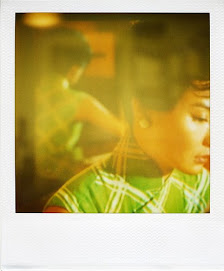
I am looking forward to seeing it as i haven't got a chance to yet though it has already finished broadcasting in Taiwan and is currently on a rerun on Public Television Service Channel in Taiwan and pirated copies are probably already widely sold in China by now....I want to watch this TV drama as I really like the director 導演 曹瑞原 as i loved Crystal Boys which he also directed and also it showcases 1940s to 1960s Cheongsams (Chinese dress) which is a passion of mine! (please read my very first post(April) on the Chinese dress!!!)
Storyline:
English: The story spans the 1940s-1960s period from Shanghai to Taiwan.....it revolves around Taiwanese musician Lin and his love story with a dance hostess Wu Bao as well as the indirect, suppressed love between Wu Bao and another dance hostess female protagonist Yun Fang. This all occurs in decadent, swinging Shanghai during the civil war period in China from 1945-1949. Then with the loss of the Nationalist Party, Yun Fang and Lin escape with the Nationalist Party to Taiwan in 1949 whilst during the wartime chaos, Wu Bao which both Lin and Yun Fang love befalls to tragedy. The story continues with the twos life in Taiwan and the entrance of another dance hostess, this time Taiwanese, into their lives........
Chinese: 藉由台灣作曲家林三郎一生的追尋與漂泊,講述一個因戰亂而交織成的亂世兒女情愛故事與難斷情緣。故事始於民國三十六年,一位台灣望族音樂家身處於動亂的內地-上海,因身份的特殊迫使其從繁盛而至頹敗;戰爭讓每一個如蜉蝣般的生命隨時代狂風擺佈,在共同的命運與旋律中,總帶著點昨是今非的悲涼。十里洋場的風月夜上海,歌舞昇平中瀰漫著一股末世的頹廢與華麗。三郎的情愛交織在舞女雲芳與五寶之間,因戰亂迫使三人分離失所。雲芳至台灣後與三郎再遇,卻只留滿面滄桑與寂寥。這是一個大時代裡台灣音樂家的流亡人生,身體的流離與靈魂的飄泊,回憶純真的花樣年華,遂成永遠的鄉愁…

Korean Entertainment Fair, Kinokuniya Bookstore, Kawasaki
Please click pic for more photos.


I went to Koreatown in Kawasaki today and it was really, really quiet and deserted, a far cry from bustling Yokohama Chinatown....had lunch at Yakiniku place owned by a Zainichi Korean (Japanese-Korean).....Kawasaki has Japan's largest concentration of Japanese of Korean ethnicity after Osaka, which has the biggest Korean population in Japan..


1945 August....Japan lost the war and Hong Kong is liberated...

Another memorable scene in the film:
Japanese soldiers are chasing after the two sisters....they run to their childhood hiding place, an underground small basement below the wooden planks of the bedroom.
'Come down, quick'
'We have grown up, there is only room for one person now..'
As Mong Dai tries to drag her sister down, her sister knowing that the japanese will not be satisfied not finding both girls removes her hand and shuts the basement door shut.....


Memorable scene in the film:
'Why did you want to sacrifice yourself' 'don't u know how to resist???' 'why?' 'why?' 'why?'
'I am hurtin...'
‘我聽人家說你 。 。 。 。’‘你為什么要犧牲自己﹖ 你不會反抗的嗎 ﹖ 為 什 么 ﹖ 為 什 么 ﹖ 為 什 么 ﹖ ’
‘我其實很痛的。 。 。 。 。 ’

Shun Dai and her father approach the Japanese military HQ....


Sisters Mong Dai and Shun Dai watch in horror as Japanese troops open fire on a young girl who accidentally crosses their path during the victory parades after their occupation of Hong Kong.


Story: The year is Dec 1941 and Mong Dai 望娣 has just returned to HK from boarding school as the school has closed down due to the rumours of imminent invasion from the Imperial Japanese Army. Her father has a pawn shop and they live above the shop. She has a sister who is traditional and uneducated and they have an evil stepmom and step sister who always bully the older sister Shun Dai 信娣 who does all the housework. Both sisters fall for Hong Kong University medical student Shum Fong 沈放 but he loves only Mong Dai. On Dec 8th 1941, the japanese troops suddenly invade Hong Kong from China and the lives of these two sisters are changed forever....

Hainan Comfort Women Case Lawyer's Explanation and Report Session June 15 2005
One of my biggest interest is on Japanese warcrimes during WW2 and post-war issues of official apology and compensation for the Asian victims of Japanese atrocities.
I have done research on this topic and collected much information over the years and have a large collection of documents , newspaper clippings, and books now...
I feel that a great injustice has been done that the Japanese government has not had to atone for what Japan did in WW2 unlike Germany....until now, unlike in Germany, Japan has not paid a single cent in official compensation(as China, South Korea and all other Asian countries decided to give up their legal rights to compensation after the war, being satisfied with Japanese economic aid and ODA which although the Japanese love to point out is compensation is simply not compensation since all economic aid given is not given in the name of wartime compensation and thus allows Japan to circumvent responsibility and atonement for the war) nor apologised sincerely (apologised many times BUT none were sincere except maybe 1995 apology since all apologies inevitably are followed by contradictory actions and words like visits to Yasukuni Shrine which honors Japanese Class A warcriminals such as Tojo and statements by senior Ministers such as former Justice Minister that deny Japanese troops ever committed any atrocities) and continues to deny WW2 atrocities committed by the Japanese Imperial Forces. This year being the 60th Anniversary of WW2 and with Japanese approval of right-wing textbooks for schools (all history textbooks now, not only the notorious one by a right-wing group, have deleted or drastically reduced references to the Comfort Women and other warcrimes) and with one of the largest-scale anti-Japanese demonstrations in China and Korea in years, i would like to discuss more on this issue....
Since i am in Japan now, i have taken the opportunity to do more research here whilst on exchange and have attended one court session on the comfort women and plan to attend the court final judgement for a well-known Chinese war-time slave labour case and other cases which i will put up pics later...